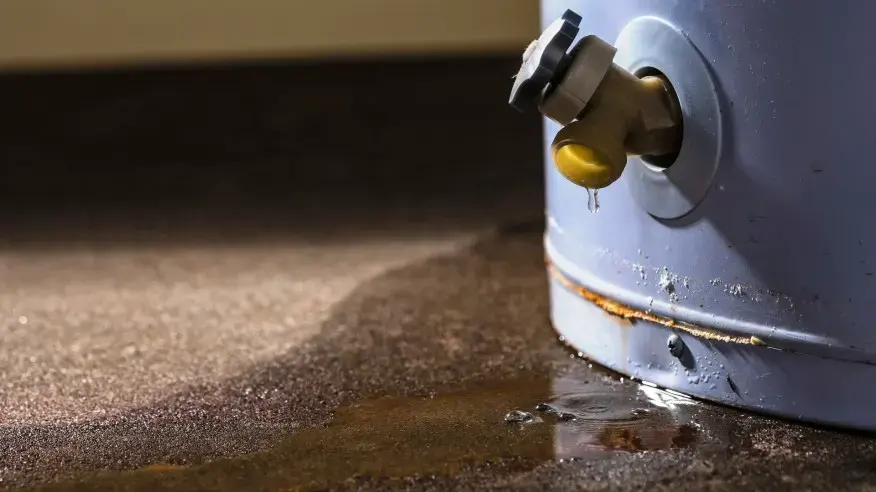
Why water heaters fail in Warren basements
Most Warren houses keep the water heater in the basement next to the furnace, often near the floor drain. A tank-style heater usually lasts around 8 to 12 years, and the hard, mineral-rich water of the region speeds up sediment buildup at the bottom of the tank. The common failures:
- A rusted tank that splits along a seam
- A leaking or discharging temperature and pressure relief valve
- A failed drain valve or supply connector
- A corroded fitting on the cold inlet or hot outlet
ENERGY STAR water heater guidance covers heater types and replacement choices once the cleanup is done.
What the cleanup involves
A failed tank keeps refilling from the cold supply, so the first step is always closing that valve. Then the extraction crew pulls the water off the floor, the tech who does the walkthrough checks how far it wicked into block walls, paneling, carpet and stored boxes, and the drying team sets air movers and an LGR dehumidifier. Water that ran across a dirty floor or into the floor drain area is treated as Category 2.
A drain pan under the heater with a line to the floor drain and a leak sensor on the floor are cheap ways to catch the next failure early.
Drying a basement utility area
Concrete floors and block walls near the heater dry well once the standing water is gone, but storage, carpet and finished walls nearby hold water. The drying team logs readings daily until everything reaches the goal. For a bigger basement loss, see basement flooding cleanup; for the drying process itself, see structural drying. The EPA WaterSense leak page has simple checks for valves and connectors.