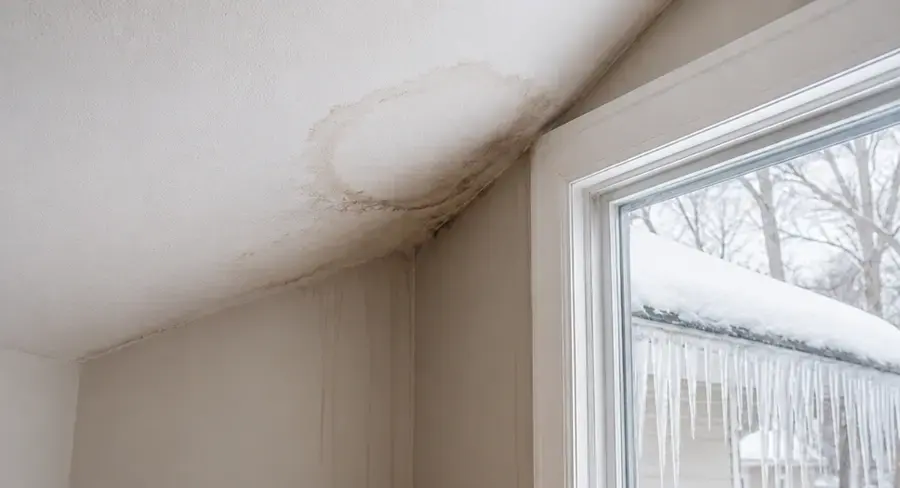
How ice dams form on Warren roofs
Warm air leaking from the house into the attic melts the underside of the snow on the roof. The meltwater runs down to the eaves, which sit over the cold overhang, and freezes again into a ridge of ice. More meltwater backs up behind that ridge, works under the shingles and drips into the wall top and ceiling. Low-slope 1950s ranch roofs with thin attic insulation and short overhangs are especially prone to it.
- Stains along the outside wall of a ceiling, often in a corner
- Water running down the inside of a window frame
- Icicles and a thick ice ridge at the gutter line
- Wet, flattened insulation just inside the eaves
Summer roof leaks
Metro Detroit thunderstorms bring wind-driven rain that finds lifted shingles, cracked pipe boots, failed chimney flashing and clogged valleys. The water usually soaks the attic insulation first and shows on the ceiling hours or days later. The National Weather Service thunderstorm page covers the wind and hail that damage roofs in these storms.
Roof leaks are a different job from interior ceiling leaks, because the source is the building envelope. A roofer stops the water; the restoration team deals with what it soaked.
Do not chip ice off the roof with a hammer or climb on icy eaves. Roof work belongs to a roofer with the right gear.
Drying the attic, ceilings and walls
The tech who does the walkthrough maps the moisture from the attic side and the room side. Wet blown-in insulation is removed so the ceiling drywall and rafters can dry, and ceiling sections that sagged or crumbled come down. The drying team runs air movers and dehumidifiers in the rooms and ventilates the attic, then logs readings until the framing reaches the drying goal. Ready.gov winter weather includes tips on keeping heat and snow from causing damage.