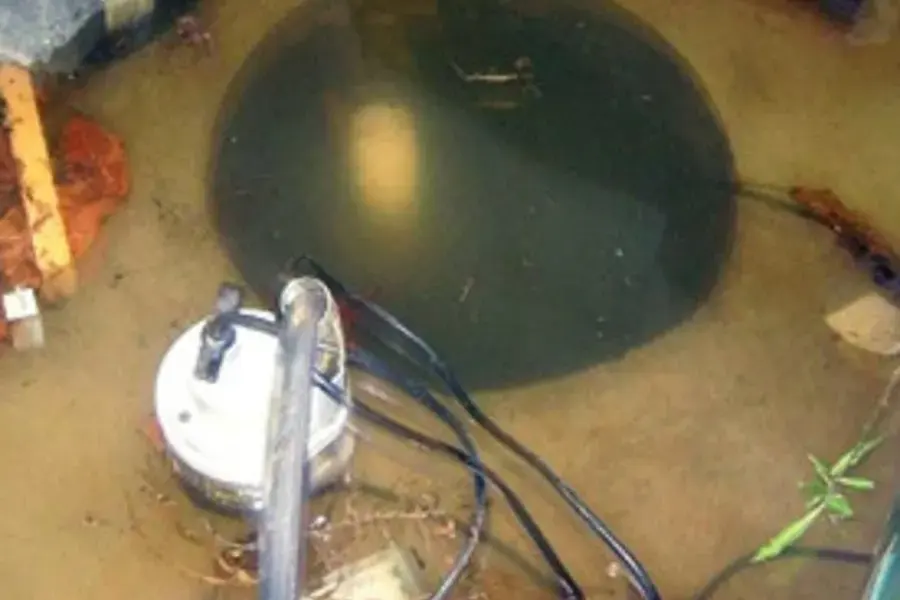
Why Warren sump pumps fail
Newer and remodeled Warren basements often have a sump pit collecting water from the footing drains around the foundation. In slow-draining clay, that pit can run hard all spring and during every summer storm. Most failures come down to a short list:
- Power outages: the same thunderstorm that fills the pit knocks out the power that runs the pump.
- Stuck or tangled floats: the switch jams against the pit wall or the cord.
- Worn pumps: a pump seven to ten years old can run but no longer keep up.
- Frozen or clogged discharge lines: water has nowhere to go in January or when the line is crushed.
Ready.gov power outage tips are worth a look for any house that depends on a sump pump.
What the cleanup looks like
Sump water is groundwater, usually Category 2 because it has run through soil and drain tile. The extraction crew removes the standing water, and the tech who does the walkthrough maps how far it wicked into carpet, paneling and drywall. Wet pad usually comes out; drywall comes out only where meters show it cannot dry in place. If the floor drain also backed up, the loss is Category 3 and the sewage backup protocol applies.
A battery backup pump or a water-powered backup is the most common upgrade after a sump failure. Test it every spring by filling the pit with a bucket.
Drying the basement to the goal
The drying team sets air movers along the wet walls and runs LGR dehumidifiers, adding a desiccant unit when a cool basement slows the drying. Readings go into the log every day until block, framing and subfloor reach the drying goal. The same process is described on the structural drying page. MSU Extension publishes practical home and flooding material through its outreach programs.