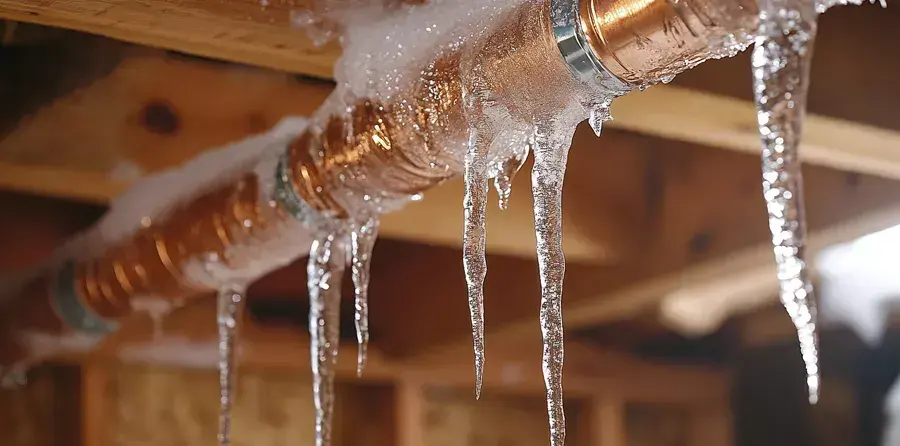
Where Warren pipes freeze
Metro Detroit winters bring stretches of single-digit nights, and wind off the open, flat ground around Warren finds every gap in a 1950s house. Pipes freeze where heat does not reach:
- Kitchen sink lines on outside walls, especially behind closed cabinets
- Supply lines running through an attached garage or over a garage ceiling
- Hose bibs and the line just inside the rim joist in the basement
- Bathroom additions and rooms over unheated porches
The National Weather Service cold safety page tracks the extreme cold that drives most of these calls.
Why the water shows up on the thaw
Water expands as it freezes, and the pressure splits the pipe, often a few feet from the actual ice plug. Nothing leaks while the line is frozen. When the house warms up or the sun hits the wall, the ice melts and water runs full pressure out of the split, into the wall cavity, down to the ceiling below and into the basement. That is why frozen pipe losses often go unnoticed until water appears somewhere far from the pipe.
The tech who does the walkthrough traces the path with thermal imaging and meters, because insulation in an exterior wall holds water and hides it. Wet insulation almost always comes out; drywall comes out where readings say it cannot dry in place.
If you are away in winter, keep the heat at 55 degrees or higher and shut the main water off. A frozen line cannot flood the house if the main is closed.
Drying in the middle of winter
Cold, dry winter air can help the drying if the house is kept warm, but a cold basement or garage slows evaporation. The drying team adjusts the setup, closing off rooms, adding heat and using LGR dehumidifiers so equipment works at its best. Readings continue daily until framing and subfloor hit the drying goal. For a split line that was not caused by freezing, see burst pipe cleanup. Ready.gov winter weather has more on preparing a house for a deep freeze.