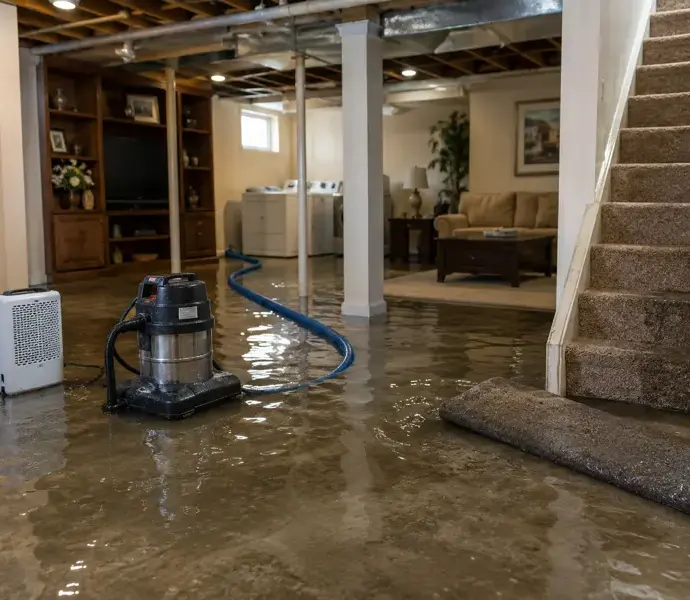
How storm water gets into Warren homes
Warren sits on flat glacial lake-plain clay in the Clinton River watershed, crossed by Red Run and Bear Creek. The clay drains slowly, the ground stays wet, and the combined pull of footing drains and street runoff can overwhelm the sewers during a heavy summer storm. The water then comes in several ways at once:
- Up through the basement floor drain when the sewer surcharges
- Over the top of window wells that fill like buckets
- Through side doors and garage slabs set close to grade
- Through wall cracks when the clay around the foundation saturates
Why storm water is treated as contaminated
Storm water that has crossed yards and streets or come up from the sewer carries bacteria, fuel, fertilizer and debris. The IICRC S500 standard treats it as Category 3. That means the mitigation team works in protective gear, removes the carpet, pad and lower drywall it soaked, and applies an EPA-registered antimicrobial to hard surfaces before drying starts.
The EPA flooding page covers the health side of floodwater cleanup, and the National Weather Service Detroit office posts flash flood warnings for Macomb County.
After the August 11, 2014 storm, thousands of Warren basements needed the same work at the same time. Photographs taken the first night made those claims far easier.
Drying a storm-soaked basement
Once the contaminated material is out, the drying team treats the basement like any structural drying job, with one difference: concrete block, poured walls and the slab can hold water for a long time, and a cool basement slows evaporation. Crews often pair LGR dehumidifiers with a desiccant unit and keep equipment running until block and framing reach the drying goal. See sewage backup cleanup for the Category 3 protocol and sump pump failure cleanup if the pump quit during the storm.