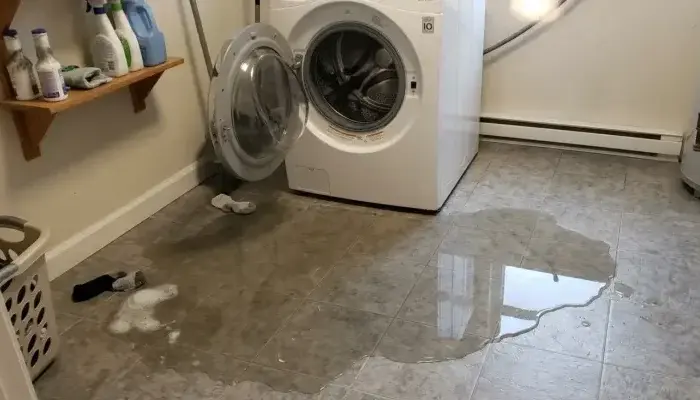
The appliance leaks that cause the most damage
In a typical Warren ranch, the kitchen sits over the basement and the laundry sits in the basement, so an appliance leak either soaks a subfloor and drips into the basement ceiling or spreads across the basement floor. The usual suspects:
- Rubber washer hoses that crack with age and burst under full pressure
- Dishwasher supply and drain connections under the cabinet
- Plastic ice-maker lines behind the refrigerator
- Braided sink and toilet supply connectors that fail at the crimp
ENERGY STAR clothes washer information is useful when a washer is being replaced after a leak.
Finding water that hides under cabinets
Supply lines leak where nobody looks. By the time water shows at the edge of a floor, it may have soaked the cabinet base, the subfloor and the insulation below. The tech who does the walkthrough uses pinless meters on flooring and cabinet bottoms and checks the ceiling underneath, so the drying plan covers all of it. Cabinets can often be dried in place by removing the toe kicks and pushing air into the void underneath.
Replace rubber washer hoses with braided stainless hoses, and turn the washer valves off when you leave for a trip.
Drying the floor, the cabinets and the ceiling below
The drying team runs air movers and an LGR dehumidifier, uses cabinet drying where needed and logs readings daily. Laminate and some vinyl plank trap water under them and may have to come up; hardwood often dries with specialty mats. If the water came through the ceiling below, see ceiling leak water damage; for a burst line inside a wall, see burst pipe cleanup. The EPA WaterSense leak checklist covers inspecting supply lines.