Emergency water removal in Warren

Water Extraction in Warren, MI

Standing water keeps soaking into block walls, carpet pad and subfloor for as long as it sits. The extraction crew pulls it out first, so the drying equipment works on damp materials instead of a pond.

(888) 612-9219Get the water pumped out of your Warren home
24/7 dispatch IICRC S500 drying goal Daily moisture logs
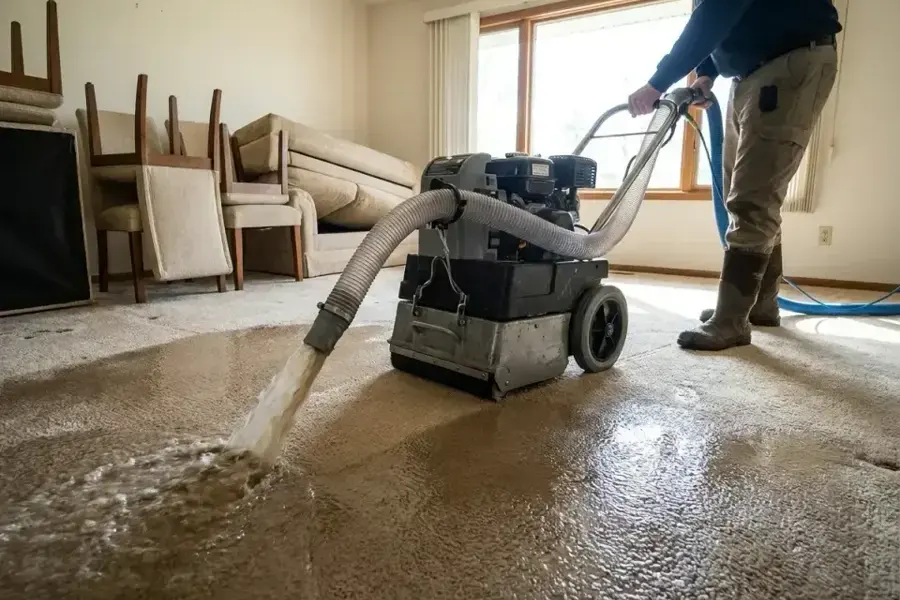
Extraction unit pulling standing water off a flooded living room floor
Water categorySet on the first walkthrough
EquipmentTruck-mounted extraction
StandardIICRC S500 drying goal
Dispatch24/7, every Warren ZIP
Work order

What to do the moment you find standing water

  1. Stop the source

    Close the main shutoff, usually on the basement wall facing the street, or the valve at the fixture.

  2. Kill wet circuits

    If the panel sits in a dry spot, switch off breakers for wet rooms. Stay out of water near outlets and appliances.

  3. Photograph it

    Take photos and video of the water on floors, walls and belongings before anything is moved.

  4. Lift, then call

    Get rugs, boxes and electronics off the floor, then call. The 24 to 48 hour window decides what can be saved.

Loss spec
Typical categoryCategory 1 from supply lines; Category 2 or 3 from drains and storm water
Typical classClass 2 to 3 once carpet, pad and wall bottoms are wet
EquipmentTruck-mounted extraction, weighted extraction tools, submersible pumps
Drying goalWithin 2 to 4 points of a dry reference material
How the work is held to standard

How water extraction is handled in Warren

Rapid local response

Warren water damage pros roll out around the clock, because water keeps soaking into block and subfloor after dark.

IICRC S500 drying standard

The drying team works to IICRC S500: structural drying, not just surface drying.

Claim-ready documentation

A moisture map, daily readings and timestamped photos go into the insurance file.

Macomb County water experts

Floor drains, sump pits and block-wall basements on slow clay are everyday work here.

Typical cost ranges

What does water extraction cost in Warren, MI?

In Warren, MI, water extraction typically runs $300 to $1,500 for the extraction itself and $1,500 to $6,000 once the full dry-out is included. Water depth, carpet versus hard floors and the water category set the number.

One room or hallway

$300 to $900
  • Portable or truck-mounted extraction
  • Carpet and pad checked
  • First moisture readings

Basement or several rooms

$900 to $2,500
  • Truck-mounted extraction
  • Pad removal and haul-away
  • Drying set up right after

Deep or contaminated water

$2,500 to $6,000+
  • Submersible pumps
  • Category 3 handling
  • Full structural drying

The drivers are the water category, the square footage that got wet, the material class (drywall and carpet versus plaster, block and hardwood) and how fast drying started. For a planning number, try the Warren water damage cost calculator.

The assembly line

The water extraction process, station by station

Every Warren job runs in the same order, because the order is what separates a finished dry-out from a cosmetic one.

  1. 01

    Map the moisture

    The tech who does the walkthrough finds the source and maps wet materials with thermal imaging and pinless meters before any equipment goes down.

  2. 02

    Extract

    The extraction crew pulls standing water with truck-mounted or portable extraction, so the water leaves the building instead of wicking further.

  3. 03

    Set the drying

    The drying team sizes air movers to each room's evaporation load and runs LGR dehumidifiers, with desiccants for dense materials.

  4. 04

    Read it daily

    Readings go into the drying log every day, and the plan changes when a wall or floor stops giving up water.

  5. 05

    Verify and document

    Equipment comes out when the wet material sits within 2 to 4 points of a dry reference, and the logs go into the claim file.

Why extraction comes before drying

Air movers and dehumidifiers remove water as vapor, at most a few dozen gallons a day per machine. A flooded basement can hold hundreds of gallons. Extraction removes that bulk water as liquid, which is far faster, so every Warren dry-out starts with pumps and wands, not fans.

The extraction crew uses a truck-mounted unit where the hose can reach, because it pulls much harder than a shop vacuum and sends the water outside instead of into a tank that fills every few minutes. Portable extractors and submersible pumps handle upper floors, deep water and spots a hose cannot reach.

  • Weighted extraction tools squeeze water out of carpet and pad that a wand alone leaves behind.
  • Submersible pumps move standing water that is more than an inch or two deep.
  • The tech who does the walkthrough checks the floor drain first: if it is backing up, the water is Category 3 and the plan changes.

What Warren basements do to standing water

Most Warren houses from the 1950s and 1960s sit on full basements with concrete block or poured walls, a floor drain near the furnace and a laundry corner. Water finds the low point, usually around that drain, and block walls wick it upward inside the cores. Carpeted rec rooms and paneled walls hold even more.

That is why the restoration team pulls water from the whole floor, lifts or removes soaked pad, and opens baseboards where readings show water behind the wall. Leaving a wet pad in place is how a clean-water loss turns into a musty one within a couple of days. The EPA flooding page explains why wet materials need to be dried or removed quickly.

A shop vacuum is fine for a spill. For water across a basement floor, extraction equipment removes in minutes what a shop vacuum takes a whole day to reach.

From extraction to a verified dry-out

Extraction is the first station, not the whole job. Once the standing water is out, the drying team sets air movers and LGR dehumidifiers to the size of each room and records readings every day. Materials come out of the drying plan only when meters show them within 2 to 4 points of a dry reference in the same house. The full process is on the structural drying page, and a basement full of water is covered on the basement flooding cleanup page.

If the water came in during a storm, Ready.gov flood safety covers staying clear of electrical hazards and contaminated water until it is removed.

Service area

Water extraction across Warren and nearby Macomb County

Warren, MI and the Macomb County ZIP codes around it

The Warren restoration crew handles water extraction in every Warren ZIP code: 48088, 48089, 48090, 48091, 48092, 48093 and 48397, from 8 Mile north to 14 Mile.

The same crews cover Center Line, Roseville, Eastpointe, Fraser, St. Clair Shores, Madison Heights and Hazel Park.

See every Warren area and ZIP

Questions

Water Extraction questions in Warren, MI

How much water can a truck-mounted extractor remove?

A truck-mounted unit pulls far more water per pass than any household vacuum and discharges it outside, so a flooded basement floor can usually be cleared of standing water in one visit. Very deep water gets a submersible pump first.

Can wet carpet be saved after extraction?

Often, when the water is clean and extraction starts within a day or two. Carpet pad usually gets replaced because it holds water like a sponge. Carpet touched by Category 3 water, such as a floor drain backup, is removed.

Why not just run fans on the water?

Fans move air; they do not remove liquid water. Running fans over standing water mainly spreads humidity into the rest of the house. Extraction first, then air movers and dehumidifiers, is the order the IICRC S500 standard follows.

Do the drywall and baseboards have to come off?

Only where meters show water behind them that cannot be dried in place. Clean-water losses caught early often dry through small access holes or with baseboards removed, without cutting full panels.

How long does extraction take?

Most rooms take well under a day of extraction work. A full basement with deep water takes longer. Drying afterward usually runs three to five days for a contained loss.

Is water extraction covered by insurance?

Sudden and accidental water, such as a burst supply line or a failed water heater, is often covered after the deductible. Storm water and sewer backup depend on flood coverage and endorsements. Coverage depends on your policy, so it is worth checking with your own insurer.

What should be moved before extraction starts?

Anything you can lift safely: rugs, boxes, electronics and furniture legs on foil or blocks. Leave anything heavy or near outlets for the crew.

Emergency water removal

Standing water in Warren? Call now.

Truck-mounted extraction, then structural drying to the IICRC S500 goal, from 8 Mile to 14 Mile.

(888) 612-9219Pump it out before it spreads
Call (888) 612-9219 24/7