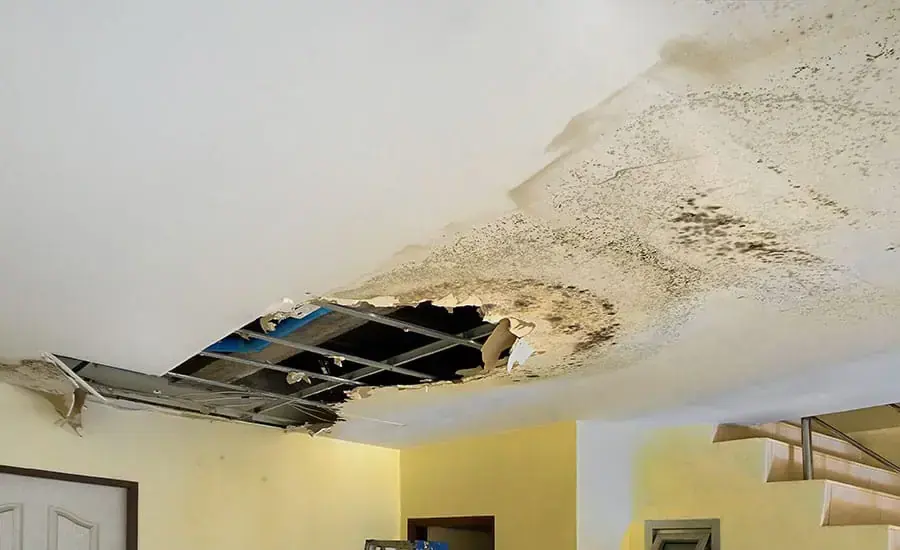
Where ceiling leaks start in Warren homes
Most Warren houses are single-story ranches with a basement, so the ceilings that leak are usually the basement ceiling under a kitchen or bathroom, and the main-floor ceilings in the colonials and bi-levels on the north end of the city. The water comes from inside the house:
- A wax ring or supply line failing at an upstairs or main-floor toilet
- A shower pan or tub drain leaking into the joist bay below
- A dishwasher or ice-maker line under the kitchen floor
- Condensate from an attic air handler or a sweating pipe
Leaks that come through the roof are a different job with a different source; see ice dam and roof leak water damage.
Why a wet ceiling is a safety issue
Drywall that soaks up water gets heavy and loses strength. A bulge can hold gallons and come down at once, and water near a light fixture or ceiling fan is an electrical hazard. The tech who does the walkthrough uses thermal imaging to see how far the water spread across the ceiling before cutting anything, then drains a bulge at its low point and removes only the section that cannot be dried.
Insulation above a wet ceiling usually comes out because it holds water against the drywall and framing. The EPA indoor air quality pages explain why damp building materials should be dried or removed quickly.
A small stain that keeps growing means the leak is still active. Find and close the valve before the drying starts.
Drying the joists and the room below
With the wet section open, the drying team pushes air into the joist bays and runs LGR dehumidifiers in the room, taking daily readings on the framing and any subfloor above. Floors below that caught the water get their own drying plan. When the leak came from a supply line, see burst pipe cleanup; when it came from a washer or dishwasher, see appliance supply line leak cleanup. The EPA WaterSense leak checklist helps catch toilet and fixture leaks early.