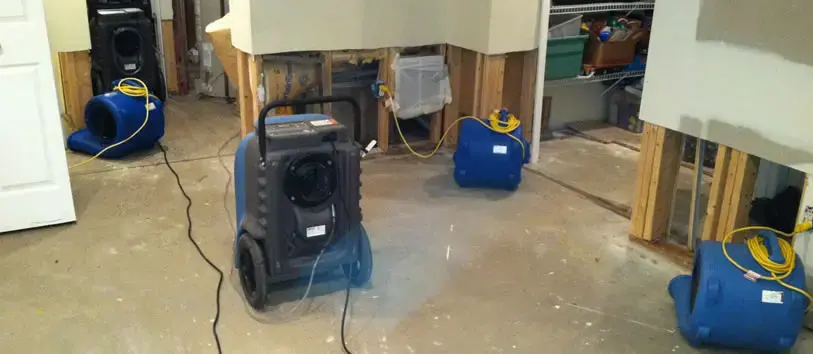
What structural drying actually means
Structural drying is drying the building itself: the framing, subfloor, block and poured walls, plaster, and hardwood, not just the carpet and the surface of the drywall. The IICRC S500 standard sets how that is done: classify the loss, set equipment to the evaporation load, measure every day, and stop only when the materials are verified dry. A contained Class 1 loss usually dries in three to five days; hardwood, plaster and block take longer.
- Class 1: a small area with low-porosity materials
- Class 2: a whole room, carpet and the bottom of the walls wet
- Class 3: water from above: ceilings, walls and floors soaked
- Class 4: dense materials like block, plaster and hardwood that hold water tightly
The equipment and why each piece is there
Air movers push dry air across wet surfaces so water evaporates faster. LGR (low grain refrigerant) dehumidifiers pull that water out of the air, even when the air is already fairly dry. Desiccant dehumidifiers work better in cold basements and on Class 4 materials, which is why they show up often on Warren block-wall basements. Thermal imaging and pinless meters find water behind walls and under floors so nothing gets sealed up wet.
The drying team records temperature, relative humidity and grains per pound in and out of the drying area every day. Those psychrometric readings, with the moisture map and photos, are what the claim file uses to show the job was done to standard. The EPA's indoor air quality pages explain why drying wet building materials quickly protects the air in the house.
Equipment leaves on readings, not on a schedule. A wall that feels dry at day three can still read far above the dry reference inside.
Structural drying on Warren houses
Warren's housing stock shapes the plan. Concrete block walls hold water in their hollow cores. 1950s oak strip floors on the main level can cup when water gets under them and need mats and patience. Cool basements slow refrigerant dehumidifiers, so crews add heat or switch to desiccants. For the water removal that comes first, see water extraction; for basements, see basement flooding cleanup. MSU Extension shares Michigan home maintenance material through its outreach programs.